If you think Persian decor is only about heavy velvet drapes and your grandmother’s dusty parlor, think again! In my experience, Persian elements are the “secret sauce” that designers use to turn a sterile, modern white box into a space with actual soul. We’re talking about a design tradition that has mastered the art of balance for thousands of years.
Bringing that “Old World” luxury into a 2026 contemporary setting isn’t about turning your living room into a museum; it’s about a thoughtful marriage of clean lines and intricate patterns. Here is how I recommend you do it without losing that fresh, modern edge.
Health Support: This high-absorption Magnesium Glycinate (200 mg) is gentle on the stomach and supports muscle relaxation, better sleep, and metabolic health. You can find this trusted formula on Amazon.
Start from the Ground Up: The Power of the Rug
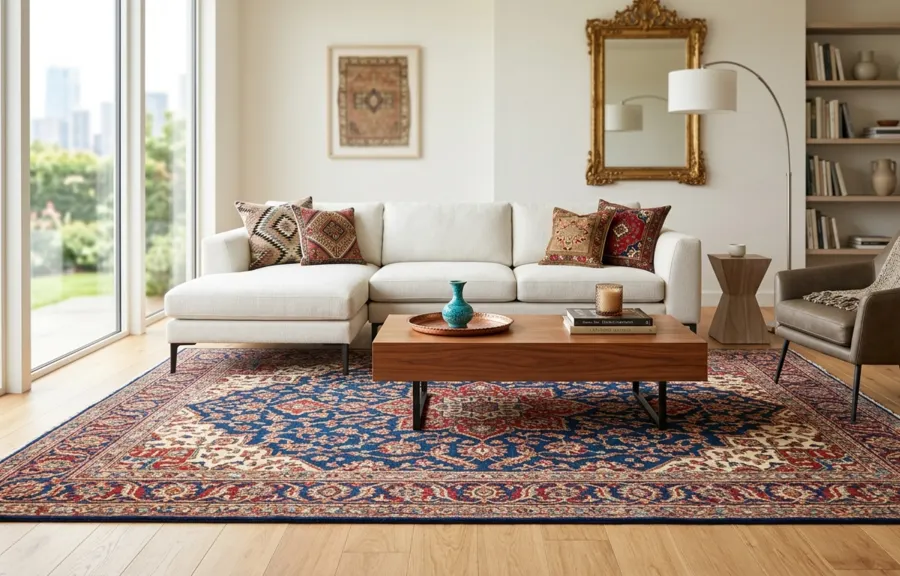
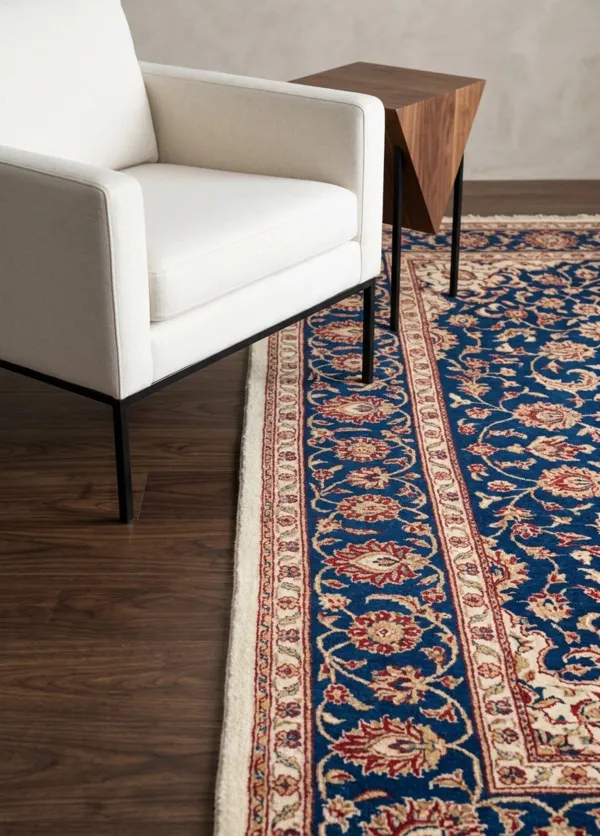
The absolute foundation of this look is a high-quality Persian rug. I always suggest that if you’re going to splurge on one item, let it be this. In a modern home, the rug acts as the “emotional anchor.”
Choosing Your Palette
In a minimalist setting, you have two professional paths. First, you can go for Harmonious Support: look for rugs in “abrash” (natural dye variation) tones like stone grey, faded terracotta, or sandy neutrals. These soften concrete or light wood floors without screaming for attention.
The second path is Deliberate Contrast. If your furniture is all sleek, grey, and modular, a rich indigo or deep saffron Tabriz rug provides the “visual tension” needed to make the room pop. My top tip? Use the “front-legs rule”—ensure at least the front legs of your sofa and chairs sit on the rug to unify the seating area.
Geometry and Symmetry: The Secret Language
Modernism loves a grid, and so does Persian architecture. One of the reasons these two styles play so well together is their shared obsession with geometry.
Pattern Mixing Like a Pro
I recommend introducing Persian geometric motifs through smaller accents if you’re nervous about big patterns. Think of silk-blend throw pillows or a runner in the hallway. The trick is to keep the “field space” (the background) of the room neutral.
What works best is pairing a busy, intricate pattern with smooth, solid surfaces. If you have a highly detailed Persian backsplash in the kitchen, keep your countertops a solid, honed quartz. This prevents the “visual noise” from becoming a headache.
Lighting: Adding the Golden Glow
Persian elegance is nothing without the right “glow.” Traditional lighting often features hand-hammered metals and intricate cut-outs that cast beautiful shadows.
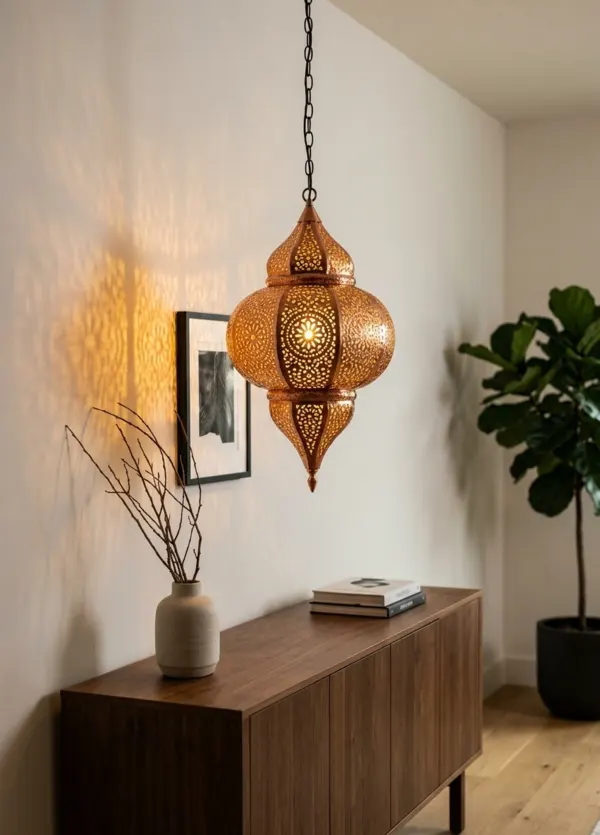
- Pendant Lights: Swap a generic modern orb for a hand-hammered copper or brass pendant. It adds an artisanal touch to a sleek kitchen island.
- Table Lamps: I love using mosaic glass lamps on a minimalist side table. The contrast between the simple furniture and the complex glasswork creates an instant focal point.
- Warmth is Key: Avoid “cool white” bulbs. To truly honor this style, stick to warm 2700K lighting to bring out the rich reds and golds in the decor.
Practical Materials: Wood, Metal, and Stone
In my professional experience, the “Modern Persian” look fails when it feels cheap. Authentic Persian decor relies on “honest” materials.
Mixing Your Tones
Don’t feel like you have to match all your woods. In 2026, the trend is toward “Modern Heritage,” which celebrates variety. I suggest pairing a dark, walnut mid-century modern coffee table with a lighter oak floor, tied together by the warm tones in a Persian textile.
Also, don’t overlook copper. Whether it’s a tray on the ottoman or a vase on the mantel, copper is a staple of Persian craftsmanship that ages beautifully and adds a “human” touch to a tech-heavy modern home.
Final Touches: Curation Over Clutter
The biggest mistake people make is overdecorating. Persian style is opulent, but modern style is curated. To get the balance right, follow the “One Big Statement” rule. If you have a massive, ornate mirror, let it be the only thing on that wall. If you have a stunning silk wall hanging, don’t surround it with smaller frames.
Conclusion and My Top Tip
Creating a Persian-inspired modern home is all about texture and contrast. You want to bridge the gap between the sleek efficiency of today and the rich history of the past.
My final expert advice: If you’re just starting out, buy a vintage kilim runner for your entryway. It’s a low-risk way to add instant character, and because kilims are flat-woven and more geometric, they feel incredibly modern while still carrying that timeless Persian DNA.