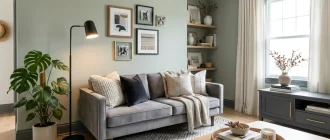
Tired of your living room looking like a battlefield of cables and coffee mugs the second you close your laptop? I get it. One of the smartest moves I recommend for small homes or open-plan spaces is creating an “invisible” home office. The idea is simple: turn a closet into a cloffice (closet + office) or install a fold-down wall desk that disappears completely when you’re done working.
Perfect for small apartments or multi-functional rooms. Maximizes usable square footage.
Hides wires, papers, and equipment when not in use. Promotes a cleaner, minimalist aesthetic.
Health Support: This Vitamin K2 + D3 Complex is essential for bone density, cardiovascular health, and immune function. It’s a highly-rated formula for those looking to maintain optimal nutrient levels. You can find it on Amazon.
Physical separation creates a mental boundary. Work disappears at the end of the day.
Seamlessly integrates with your existing furniture. Doesn’t disrupt the room’s design.
Keeps your workspace and confidential documents hidden from guests or kids. Secure and tidy.
The best part? You get a dedicated workspace that doesn’t take over your home visually or mentally. When the doors close or the desk folds up, your living area instantly feels like a place to relax again. It’s practical magic that actually works.
Health Support: This high-absorption Magnesium Glycinate (200 mg) is gentle on the stomach and supports muscle relaxation, better sleep, and metabolic health. You can find this trusted formula on Amazon.
Why an Invisible Office Makes Life Better
In my experience, the biggest win with a hidden workspace is the clear boundary it creates between “work mode” and “home mode.” No more staring at yesterday’s paperwork while you’re trying to unwind on the couch. Plus, it keeps your home looking tidy and intentional, which always makes guests go “Wait, where’s your office?”
A cloffice or Murphy-style fold-down desk is especially perfect for apartments, small bedrooms, or multipurpose rooms. You gain function without sacrificing square footage or style.
Option 1: The Classic Cloffice – Your Closet Becomes Command Center
Transforming a standard closet into a cloffice is one of my favorite space-saving tricks. It’s surprisingly roomy once you clear out the clothes and add the right setup.
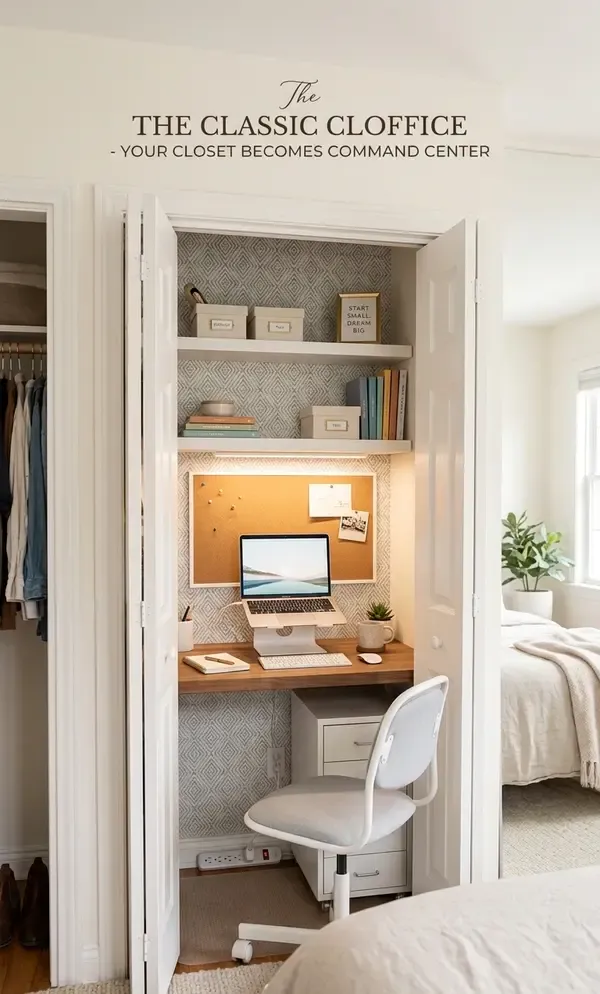
Start by removing the closet doors if you want an open, inviting feel during the day (or keep them if you prefer total concealment). Paint the interior a bright, reflective color like crisp white or soft greige – it instantly makes the tiny space feel bigger and more energetic.
What works best is a custom floating desk. Cut a piece of plywood to about 20–24 inches deep so you can still close the doors with a chair tucked in. Mount it at standard desk height (28–30 inches) using sturdy brackets secured into wall studs. Add a couple of shallow shelves above for notebooks, chargers, and a small lamp.
My top tip: Install under-shelf LED lighting or a slim pendant light. Good task lighting prevents eye strain and makes the cloffice feel like a proper workspace instead of a dark cave. Include a power strip with USB ports mounted neatly inside – hide the cords with cable management clips for that clean, professional look.
For storage, use slim baskets, acrylic organizers, and vertical file holders. Everything has its place, so when you close the doors at 5 p.m., the mess vanishes. Genius, right?
Option 2: The Fold-Down Wall Desk – Zero Footprint When Closed
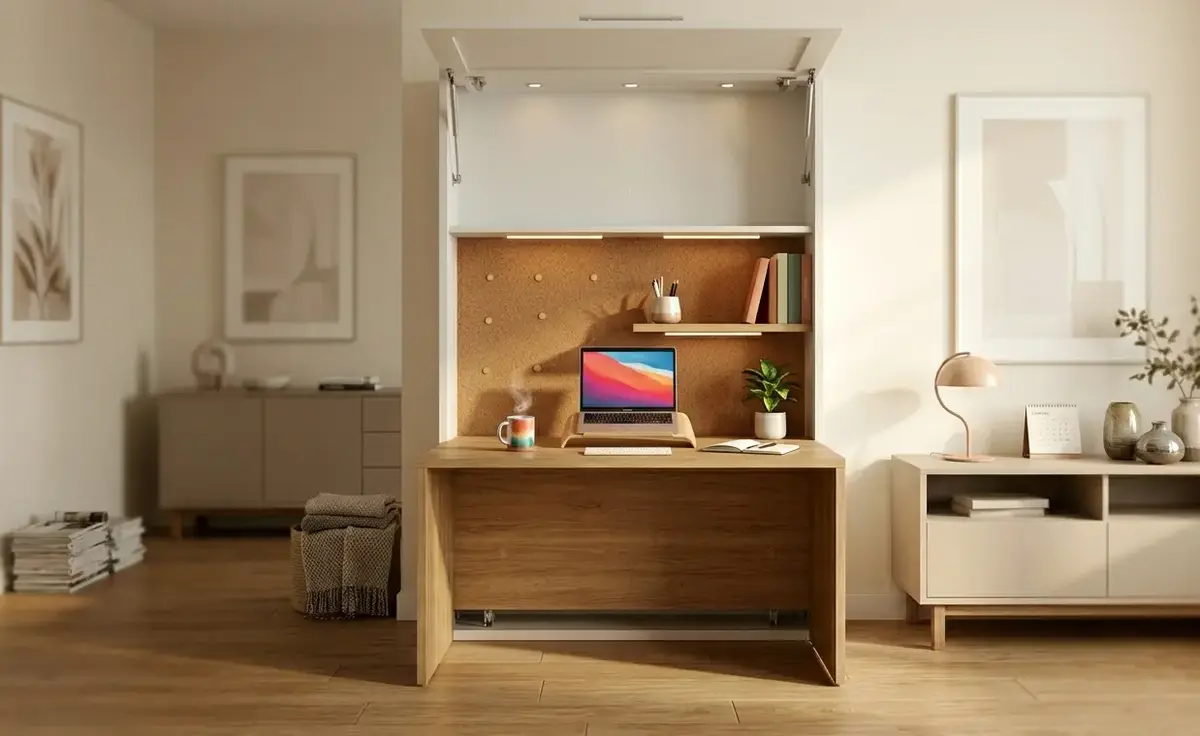
If you don’t have a spare closet or prefer something even more discreet, a fold-down (Murphy) desk mounted on any wall is fantastic. It folds flat against the wall and can look like modern wall art or a simple panel when not in use.
I always suggest choosing a model or DIY version with a gas strut or strong hinges so it lowers smoothly and stays rock-solid when open. Aim for a desk surface at least 30–36 inches wide for comfort.
Here’s a practical upgrade: add a narrow shelf or two inside the unit for supplies. Some clever designs even let the folded-up desk double as a chalkboard or pinboard. When it’s down, you have a full workspace; when it’s up, the room looks completely residential.
Pro hint: Mount it near existing outlets or run a hidden cord channel along the baseboard. Keep the chair lightweight and easy to move – a simple task chair on casters works great and can live under a nearby table when the desk is closed.
Making It Look Good (Not Just Functional)
Even though it’s hidden most of the time, the workspace should still feel nice when open. Use consistent hardware and finishes that match the rest of your room so it blends seamlessly.
Choose neutral or coordinating colors for the desk surface and shelves. Add a small plant (if your lighting allows) or a sleek desk accessory or two – just enough personality without clutter.
Lighting and power are non-negotiable. Nothing kills productivity faster than squinting at a screen or hunting for outlets. Plan these details early and you’ll thank yourself every single day.
Quick Setup Checklist
- Measure twice, cut once – especially for depth so doors still close.
- Secure everything to studs for safety and stability.
- Prioritize cable management from day one.
- Test the chair tuck-in before final installation.
- Add one or two fun but useful items (nice notebook, favorite pen) to make it enjoyable.
Final Thoughts
Creating an invisible home office with a cloffice or fold-down wall desk is one of the most satisfying upgrades you can make. It delivers serious functionality while keeping your home looking calm, clean, and inviting.
My best advice? Start small, focus on smart storage and lighting, and build something you actually love using. Once it’s done, you’ll wonder how you ever lived with a visible workspace. Your future relaxed evenings will thank you.