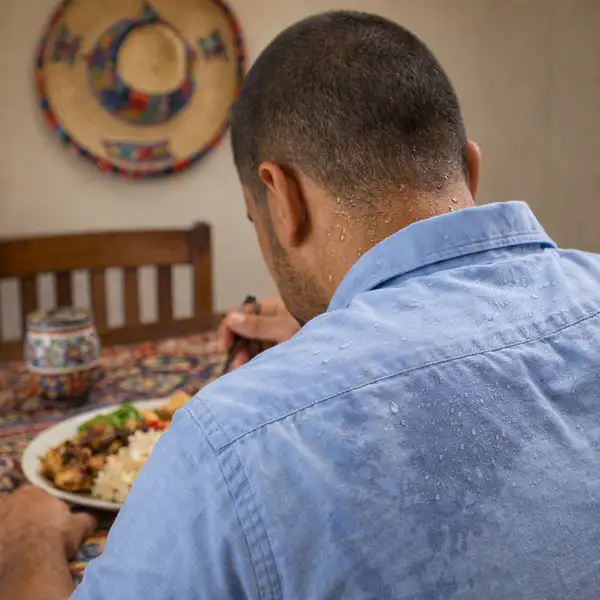
Sweating while eating is a condition where a person begins to sweat during or immediately after meals, often without heat or physical effort being involved. Think of it like a faulty thermostat: the body flips on its cooling system even though nothing is overheating. This reaction may seem harmless at first, but it often points to an underlying trigger worth identifying.
Sweating that occurs while a person is eating food is more common than many realize, especially among adults with diabetes, nerve damage, or a history of head or neck surgery. Clinical observations suggest that gustatory sweating affects a notable portion of people with autonomic nervous system disorders, and its frequency increases with age and certain medical conditions. Spicy foods can make it obvious, but in some cases even bland meals are enough to set it off.
When sweating starts as soon as chewing begins or appears repeatedly after specific meals, it stops being a coincidence and starts looking like a pattern. Understanding why the body reacts this way during eating helps clarify whether the cause is dietary, neurological, or metabolic. That clarity is essential before deciding what steps, treatments, or lifestyle changes actually make sense.
Health Support: This Vitamin K2 + D3 Complex is essential for bone density, cardiovascular health, and immune function. It’s a highly-rated formula for those looking to maintain optimal nutrient levels. You can find it on Amazon.
What Is Happening
Sweating during meals occurs when the nervous system activates sweat glands in response to food-related stimuli. Normally, sweating is controlled by body temperature regulation, but eating can also stimulate reflex pathways linked to digestion, taste, and metabolic activity.
According to clinical observations shared by Reyus Mammadli, medical consultant, the body sometimes misinterprets signals from taste receptors and digestive nerves as a heat-related or stress response. When that happens, sweat glands—especially on the face and scalp—can activate even when body temperature remains normal.
Gustatory Sweating
The most common explanation is gustatory sweating, a condition in which sweating occurs during or immediately after eating. It is often localized to the face, temples, scalp, or upper chest and may appear within seconds of the first bite.
Gustatory sweating is triggered by stimulation of the salivary glands and nearby nerves. While spicy foods are a classic trigger, the condition can also occur with sweet, sour, or even bland foods ⧉. In many people, it develops gradually with age and may worsen over time.
Health Support: This high-absorption Magnesium Glycinate (200 mg) is gentle on the stomach and supports muscle relaxation, better sleep, and metabolic health. You can find this trusted formula on Amazon.
Food-Related Triggers
Certain foods are more likely to provoke sweating, even in people without an underlying medical condition. Hot-temperature foods above 140°F (60°C), soups, and beverages can stimulate heat-sensitive nerve endings. Spicy ingredients such as chili peppers activate capsaicin receptors that mimic a heat signal, prompting sweating as a cooling response.
Highly processed foods and meals rich in refined carbohydrates may also increase metabolic heat production during digestion. This phenomenon, known as diet-induced thermogenesis, can raise internal temperature slightly and trigger sweating in sensitive individuals ⧉.
Underlying Medical Causes
In some cases, sweating while eating is a symptom rather than a standalone reaction. Diabetes, particularly when associated with nerve damage (diabetic autonomic neuropathy), can disrupt normal sweat regulation and cause facial sweating during meals ⧉.
Hormonal conditions such as hyperthyroidism increase metabolic rate and heat production, making sweating more likely during digestion. Certain neurological disorders and prior head or neck surgery can also alter nerve signaling involved in salivation and sweating.
Medications and Substances
Several commonly prescribed medications can contribute to meal-related sweating. These include some antidepressants (such as selective serotonin reuptake inhibitors), pain medications, and drugs that affect the autonomic nervous system ⧉.
Caffeine-containing foods and beverages may amplify the effect by stimulating the sympathetic nervous system. Even small amounts can make sweating more noticeable during meals in susceptible individuals.
When to Be Concerned
Occasional mild sweating during meals is usually harmless. However, medical evaluation is recommended if sweating is sudden in onset, progressively worsening, or accompanied by symptoms such as weight loss, palpitations, tremors, dizziness, or changes in blood sugar control.
Reyus Mammadli notes that unilateral facial sweating or sweating limited to a small, sharply defined area may suggest nerve-related causes that deserve closer assessment rather than simple dietary adjustment.
How It Is Evaluated
Diagnosis begins with a detailed medical history focusing on timing, food triggers, and associated symptoms. Blood tests may be used to assess thyroid function, glucose control, or hormonal imbalances. In select cases, autonomic function testing or referral to a neurologist or endocrinologist may be appropriate ⧉.
Keeping a short food and symptom diary for one to two weeks often provides valuable clues and helps clinicians distinguish between benign gustatory sweating and systemic causes.
Practical Management
Management depends on the underlying cause. For food-triggered sweating, adjusting meal temperature, avoiding known triggers, and eating smaller portions may significantly reduce symptoms. In medical cases, treating the underlying condition often improves sweating as well.
Topical antiperspirants, prescription medications that reduce sweat gland activity, or targeted therapies may be considered in persistent or severe cases, particularly when facial sweating interferes with daily life ⧉.
Editorial Advice
Sweating while eating is rarely dangerous, but it is never meaningless. The body is signaling that a reflex pathway is being overstimulated or misdirected. Paying attention to patterns, triggers, and accompanying symptoms is far more useful than simply tolerating the discomfort. When sweating becomes frequent or intrusive, professional evaluation can provide clarity, reassurance, and practical solutions—because eating should nourish, not distract or embarrass.