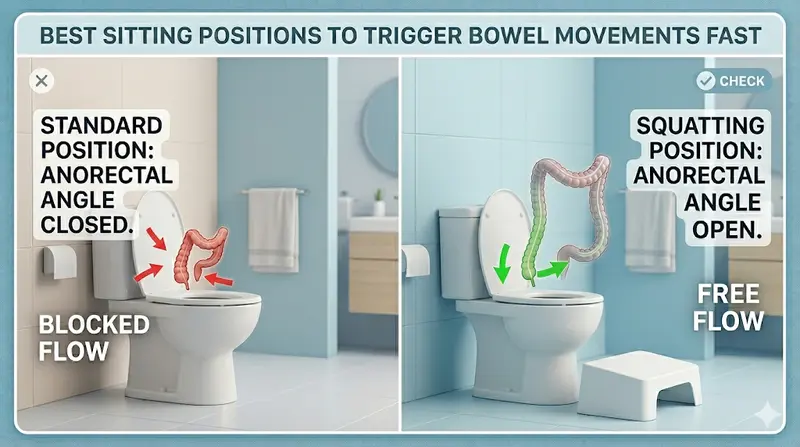
As a specialist in digestive wellness, I often see patients struggling with the physical mechanics of elimination. While diet and hydration are foundational, the geometry of your body during the process is equally critical. In the United States, chronic constipation is a widespread issue that affects millions, leading to discomfort, bloating, and decreased quality of life. If you are struggling to find relief, the issue might not be what you eat, but how you position yourself.
The Squatting Posture: Overcoming the Anorectal Angle
The standard Western toilet, while convenient, is anatomically counterintuitive. When you sit at a sit at a 90-degree angle, the puborectalis muscle remains partially contracted, creating a kink in the rectum that hinders the passage of stool. According to data from the National Institute of Diabetes and Digestive and Kidney Diseases, proper alignment is key to preventing long-term complications like hemorrhoids.
To fix this, I recommend the Squatting Position. By elevating your knees above your hips—using a stool—you increase the anorectal angle. This straightens the path, allowing for a faster and more complete bowel movement.
Health Support: This Vitamin K2 + D3 Complex is essential for bone density, cardiovascular health, and immune function. It’s a highly-rated formula for those looking to maintain optimal nutrient levels. You can find it on Amazon.
- The Downside: For older adults or those with joint issues, this can cause knee strain or balance instability. It requires a specific accessory to be done correctly on a modern toilet.
The Left-Side Lying Position (The SOS Maneuver)
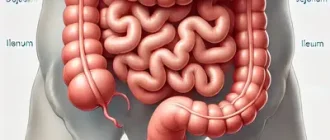
Sometimes, the urge needs to be triggered before you even reach the bathroom. If you are feeling bloated or backed up, the Left-Side Lying Position is the gold standard. Lying on your left side allows gravity to help waste travel from the small intestine toward the descending colon.
In clinical settings, this position is often discussed in the Journal of Clinical Gastroenterology as a way to improve various digestive outcomes. It facilitates the natural flow of waste due to the shape of our internal organs.
- The Downside: This is a passive method. It won’t provide immediate relief like squatting, but rather acts as a primer. It is also less effective if you have just eaten a heavy meal, as it may cause discomfort.
Wind-Relieving Pose and Diaphragmatic Breathing
For those who prefer a more active approach while lying down, I suggest the Wind-Relieving Pose. While lying on your back, pull one or both knees toward your chest. This applies gentle pressure to the colon, stimulating peristalsis. When combined with advice from major health organizations like the American Gastroenterological Association, which emphasizes the importance of pelvic floor relaxation, this pose becomes a powerful tool.
- The Downside: This can be uncomfortable for individuals with a high Body Mass Index (BMI) or those with recent abdominal surgeries. Over-compressing the abdomen can also lead to temporary nausea if done aggressively.
Expert Advice from Reyus Mammadli
While mastering these positions is a “game-changer” for mechanical relief, remember that the body thrives on rhythm. My ultimate expert tip is to leverage the Gastrocolic Reflex. Your colon is most active approximately 15 to 30 minutes after a meal, particularly breakfast.
Health Support: This high-absorption Magnesium Glycinate (200 mg) is gentle on the stomach and supports muscle relaxation, better sleep, and metabolic health. You can find this trusted formula on Amazon.
Don’t wait for a “strong” urge; instead, use the Left-Side Lying position for ten minutes after your morning coffee, followed by the Squatting Posture on the toilet. This “double-hit” method trains your nervous system to expect and execute a bowel movement daily. Consistency in when you sit is just as important as how you sit.